
The Chancellor’s speech had some positives as well as negatives, and perhaps revealed something about interdepartmental rivalries too. But the chasm between rhetoric and reality seems as wide as ever.
Six points struck me about John Healey’s first major speech as Chancellor on Monday. The first was that he was giving it all.
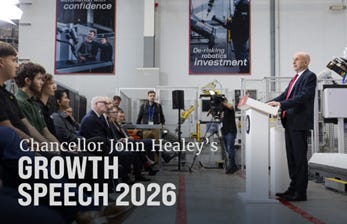
This is not just because Healey’s appointment to this role was unexpected. It was also because of the new Chancellor’s emphasis on “Growth”.
Isn’t the responsibility for economic growth policy supposed to be moving to No.10 North, leaving the Treasury to focus on the public finances? Was this speech an attempt to retain some broader influence?
Healey’s inclusion of the phrase “fiscal credibility is indivisible from growth” was particularly interesting, as the new Prime Minister seems to think that these two roles need to be separated…
The second point was the sheer laziness of some of the more political content of Healey’s speech (which was wisely redacted, as usual, from the version on the government website).
Top of the list here was the dodgy claim that there is still a “Truss penalty” in the cost of UK government borrowing.
Even if you agree with Healey that the mini-Budget was the key driver of the spike in gilt yields in 2022 – ignoring the global backdrop, the UK’s greater economic and fiscal exposure to the energy shock, the aggressive bond sales by the Bank of England under QT, and the ticking timebomb of liability-driven investment (LDI) – that was FOUR years ago.
I have yet to meet a single bond trader who still blames Liz Truss for the current problems. If anything, there is some recognition that most politicians, including the Conservatives, have learned the lessons and will not make the same mistakes again.
In the meantime, the Labour government has already had two years to restore any fiscal credibility lost under the Tories. If Healey’s predecessor has indeed rebuilt the foundations, why are UK yields still such an outlier?
Put another way, this chart shows what has happened to the cost of mortgage borrowing in the United States over the last few years. Is Liz Truss responsible for all this too?
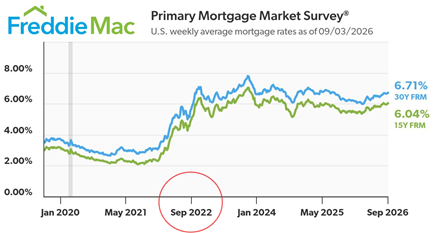
If Labour politicians really want to blame a female Conservative Prime Minister for the UK current woes, I would suggest Theresa May, who ushered in the disastrous “net zero” policies and needlessly prolonged the Brexit uncertainty, rather than either Liz Truss or Margaret Thatcher.
Third, there was more guff about the benefits of increased “public control” (a phrase that appeared six times in the speech).
Of course, neither Burnham nor Healey really mean “public control”. The markets can already deliver that – think of the “public” as customers and investors – with some additional regulation if needed where competition is weaker.
Instead, they are talking about “state ownership” and “state direction”. This means that Ministers with zero business experience and who are in hock to the trade unions will now be running companies and trying, yet again, to pick “winners”.
Moreover, it is not clear how this is supposed to help with the cost of living. State ownership could just mean lower productivity and more taxpayer subsidies; someone still has to pick up the bills.
More broadly, prices have risen much faster in sectors with heavy state intervention than in those where market forces operate more freely.
Healey’s willingness to use public procurement as a strategic tool “to ensure that we back British firms across more of the public sector” is problematic too.
How is “Buy British” consistent with international obligations to allow open competition? What will this mean for British firms trying to bid for overseas contracts? And is this just another form of protectionism, acting against the best interests both of service users and taxpayers?
Fourth, though, Healey’s speech was not all bad. In particular, the upbeat tone contrasted with the doom and gloom when Rachel Reeves first took the helm.
There is indeed some evidence that the UK economy is “turning the corner”. This is largely because the fallout from the crisis in the Middle East has not been as bad as feared, at least not yet. But the mood of businesses and consumers has mostly improved, and there are even some tentative signs that the jobs market is stabilising.
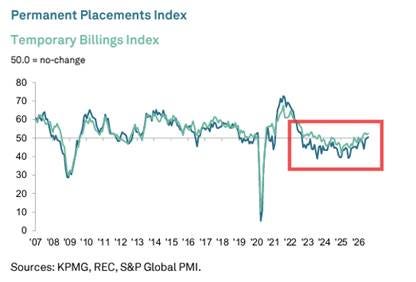
I have also written a piece in the Telegraph myself drawing attention to the new data suggesting that UK productivity may finally be picking up. In short, it is too soon to be sure, but if this improvement is sustained it could ease the pressure for increases both in taxes and in interest rates.
Fifth, there was a welcome if belated recognition that, in Healey’s own words, “the cost of business – that’s energy bills, regulation burdens, planning constraints, labour costs – have grown since Covid. And I want to draw the line.”
This bit was great…
“And third, I will take an axe to the thicket of consultation, litigation and administration that has a stranglehold too often on private investment.
So, I confirm today my commitment to reducing the burden of business regulation by 25% by the end of this Parliament.
And I can today announce that we will extend our reforms of judicial review from energy to all major infrastructure so that vexatious legislation and vexatious litigation cannot block economic growth.
Let me also confirm, that I am committed to delivering the findings of the Fingleton Review, and I’ll go further, I’ll extend those to other sectors, including launch of a review of the costs review of rail infrastructure.
And later this autumn, Johnny Reynolds, the Business Secretary and I will convene the major regulators to kickstart work ahead of the Spending Review to identify where those regulators are holding British business back and make practical changes to cut through.”
Encouragingly, this was lambasted by the Morning Star as heralding a wave of deregulation… if only!
Sixth, and much less positively, the chasm between rhetoric and reality is likely to continue. The Labour government has already failed miserably in its ambitions to kick-start housebuilding, or explain how it is going to fund a big increase in defence spending.
Healey’s recognition that the burden of tax and regulation has been increased too much also does not seem to extend to the reversal of any of the increases in tax and regulation that have happened under Labour. Indeed, the government seems determined to press ahead with more regulation of the employment, rental and energy markets.
The Chancellor rightly talked up the UK’s strengths in sectors such as financial services and life sciences. But his own government’s proposed EU reset threatens to undermine the UK’s regulatory freedoms here – as well as freedoms on tax, new trade deals, and industrial policy.
The decision to cut the Treasury Green Book’s main discount rate was revealing too.
This cut, from 3.5% to 3%, should make it easier for long-term infrastructure projects to pass a paper test to demonstrate that they are value for money. This follows an independent review and is not necessarily a “bad thing”.
But of course, this changes nothing in the real world. More borrowing is still more borrowing, even if earmarked for investment, and the markets are already concerned about the Burnham government’s fiscal plans.
Indeed, Burnham and Healey now look set to double down on many of the bad choices made by Starmer and Reeves: more spending, more borrowing, and even more tax. Whatever the new Chancellor’s good intentions and fine words, this is unlikely to end well.
You can follow me on X (formerly Twitter) @julianhjessop and on Bluesky @julianhjessop.bsky.social.

