
The Bank of England MPC’s decision to keep interest rates on hold this week was widely predicted, but the accompanying language was more hawkish than expected. The clear message was that the Bank no longer has a bias towards further cuts and is now ready to change rates in either direction.
This has already triggered a sharp rise in the government’s cost of borrowing (especially the shorter-dated gilts in the table below), as the markets speculate that the next moves in interest rates will be up.
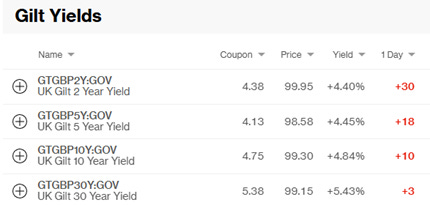
The reassessment of the outlook for official interest rates will inevitably be reflected in the cost of fixed-rate mortgages too.
This was always going to be a difficult balancing act for the MPC. It is still right to look past the temporary impact of the surge in energy prices, especially as these will also dampen economic activity. Nonetheless, it will take time to gauge all the second round effects, including on inflation expectations which, at least in the MPC’s view, could fuel a “wage-price spiral”.
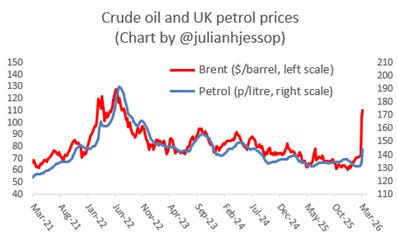
The prospect of further large increases in the cost of motor fuels is especially worrying, as these are bought relatively frequent and their prices are highly visible.
Given all the current uncertainty – and after leaving interest rates too low for too long in the wake of the pandemic – the MPC can be forgiven for talking tough.
Bank staff have already raised their own inflation forecasts. Consumer price inflation is now expected to rise from 3% in January to around 3½% in March and still average around 3% between April and June. Previously, the Bank had expected inflation to drop to just above 2% target next month, reflecting the falls in regulated prices.
Inflation could then rise again, perhaps back to 3½%, largely depending on what happens to the Ofgem cap on domestic energy bills in July.
In these circumstances, it was no surprise that the vote to hold rates was unanimous, and that many members chose to emphasise the risks that inflation remains well above the 2% target for even longer.
Indeed, if the Bank staff had run the numbers again this morning (after the overnight jumps in the prices of both oil and natural gas), the inflation projections could all be at least ¼% higher.
In short, the Bank’s job is to worry about inflation, not growth (at least in the short term), and it cannot ignore these upside risks.
The European Central Bank took much the same line today, signalling a willingness to move rates in either direction depending on how the data play out. The big difference is that the ECB had already lowered rates to 2%, whereas the Bank of England (at 3.75%) had been expected to cut further.
For what it is worth, I do not think that the rate increases which are now priced into the UK markets are a done deal. The future path of interest rates will still depend on the incoming data on both inflation and activity, and the need for at least five of the nine MPC members to vote for a hike is still a high bar to clear.
Moreover, the persistent weakness in the labour market suggests that the chances of a new “wage-price spiral” are slim. The latest figures show that regular pay growth in the private sector has eased to just 3.3%. This is broadly in line with the MPC’s 2.0% inflation target, assuming a further improvement in labour productivity.
Pricing power in the rest of the economy is also weak – a point stressed by Governor Bailey and several other members.
Nonetheless, today’s statement was definitely meant to leave all the options open. It still seems premature to price in any hikes in rates, but inflation is now set to remain above target for even longer. The MPC may yet feel compelled to tighten, despite the rising risks of recession.
 Plain-speaking Economics